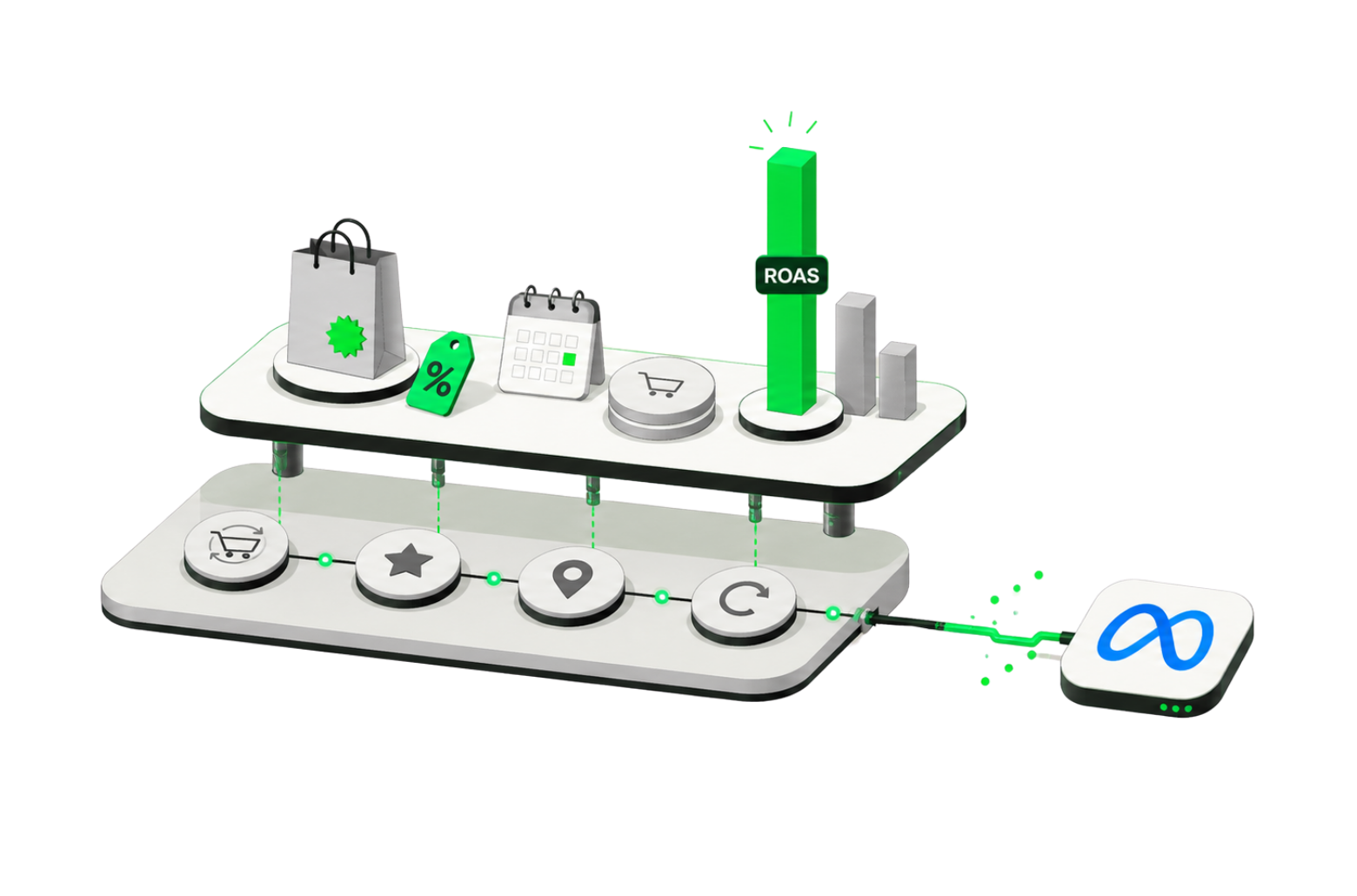
In Part 1, we followed Gymshark’s measurement maturity story: Daniel Green’s public account of moving past Ads Manager to MMM and MTA (Charlie Oscar), and the bid gap that opens when you know the incremental truth but ad platforms are still learning on short-window purchase proxies.
This piece picks up the next chapter.
When Carly Natalizia became Chief Commercial Officer in early 2026 (TheIndustry.fashion), she described the remit in terms that go well beyond paid social:
“The opportunity to oversee our commercial activities, as we continue on our journey to become a wholly omnichannel brand, while not losing that critical digital experience, is something I’m wildly passionate about ... “I can’t wait to play my part in ensuring Gymshark becomes a 100-year brand.”
That’s not marketing poetry. It’s an operating model. Stores in London, Dubai, and New York (Retail Gazette). A public gym in Miami. Loyalty XP for workouts and email signups, not just checkout. Drop culture that employees and customers both recognize by name.
Omnichannel scale makes the signal problem from Part 1 harder, not easier, because not every ROAS spike teaches the platform the same thing. A full-price drop, a community-led launch, and a sale window can all lift conversion in the short term. But they do not carry the same customer-value signal.
Retail moves on a clock paid media doesn’t respect.
On the Uncensored CMO podcast, Natalizia put it plainly:
“In retail, you lose a day’s trade and that trade is gone.”
Gymshark runs both clocks at once: retail days that do not come back, and launch moments where capsule drops, collabs, and promo windows can all spike conversion for a week and look like victory in Ads Manager. The problem is that those spikes are not equivalent: a full-price drop may reveal high-intent brand demand, while a sale window may over-reward discount-led conversion.
Ben Francis has been equally clear that FY25’s lower profit was intentional: reinvestment in stores, community, and long-term brand over short-term margin extraction (SGB Media). The commercial org is under efficiency pressure even as revenue hits record levels (Retail Gazette), a combination that punishes acquisition that looks cheap upfront and expensive later.
Hannah Mercer, GM of Retail & Wholesale, has warned about the discipline required as physical retail expands: without segmentation, stores “overlay each other, and you start to cannibalise each other’s trade” (Drapers).
Our read: when launch weeks, promos, and IRL moments stack on top of each other, short-window ROAS becomes a particularly poor proxy for customer value, not because teams measure badly, but because different kinds of demand get treated as the same optimization signal.
Gymshark’s paid media narrative (in vendor-published case studies) emphasizes scaling new customer revenue on Meta, Pinterest, TikTok, and Snapchat, with automated budget tools freeing time for creative strategy.
That’s a rational focus for growth. It also highlights a structural tension: platforms default to optimizing on the conversion events you give them (usually first-order purchase or CPA), not on whether that customer joins your loyalty tier, completes a workout challenge, or buys again sixty days later.
Gymshark’s loyalty program makes the leading indicators explicit. Members earn XP by shopping online and in store, completing workouts, and signing up for texts and emails. Those behaviors are long-horizon value signals. They live in first-party data. They are not, by default, what Meta or Google bid algorithms learn on.
Category data reinforces why that matters. Apparel benchmarks on Shopify-heavy samples suggest a median of roughly 68 days to a second purchase, with only about one in five repeat buyers returning within 30 days. The signal risk is highest during sale and promo periods: first-order conversion can rise, while the platform learns from customers who are more price-led, lower-margin, and less likely to repeat at full price.
None of this means acquisition is broken. It means acquisition and retention can pull in different directions unless the same definition of “value” reaches the platform layer.
Churney works with data-warehouse-mature consumer brands whose Meta and Google campaigns are constrained by exactly this pattern: platforms learn from short-window conversion signals, while real customer value shows up in returns, repeat, upsell, margin, or loyalty behaviors weeks or months later. The goal is not to suppress launch demand. It is to help platforms distinguish the customers a brand wants to keep learning from from the customers who only look valuable inside a short promo window.
The frame is pLTV activation with experiment-grade measurement, not another dashboard.
Gymshark is not a Churney customer. We cite their public story because they illustrate a category leader that has already climbed the measurement maturity ladder. The next layer for brands at that stage is often signal design: upgrading what the platform learns on while keeping MMM and MTA for your team’s decision-making.
Teams we work with often start narrow:
Proof lives in verticals with delayed-value patterns (retail, subscription, and apps where cohort maturity matters), not in invented Gymshark outcomes.
If Part 1’s bid gap and Part 2’s omnichannel signal problem describe your world (measurement maturity in place, but platforms still learning from short-window proxies that treat every ROAS spike alike), the next step is a scoped conversation, not a rip-and-replace of your stack.
Take the Growth Predictability Test →
Or talk to a Churney expert about a holdout-first pilot for one channel and geo.
Read Part 1: Gymshark fixed measurement. What is Meta still learning on?
This two-part essay uses public statements by Gymshark employees and industry data. At the time of writing, Gymshark is not yet a Churney customer. Quotes are cited for narrative and category insight, not endorsement.
About this series
This two-part essay uses public statements by Gymshark employees and industry data to explore a constraint facing scaled DTC sporting-goods brands. Gymshark is not yet a Churney customer; quotes are cited for narrative and category insight, not endorsement.