What's on the other side of your ad campaigns? The answer isn't a smarter bidding algorithm. Today's advertising platforms are already among the most advanced prediction systems ever built. Their biggest limitation is much simpler: they can't optimize for information they never receive.
GEM (Meta's Generative Ads Model) is trained across thousands of GPUs. Beneath it is Andromeda (the retrieval engine), which narrows tens of millions of candidate ads down to the few thousand considered for each person. Google Smart Bidding sets a bid for every individual query, millions of unique bids every second.
As you might expect, this is the most sophisticated prediction machinery ever pointed at human behaviour. The reasonable conclusion: the platform must already know who your best customers are.
It doesn't. And it can't.
The machine has a gaping blind spot. Everything the bidder knows ends shortly after the click. The renewal in week six, the repeat order in month three, the annual subscriber quietly compounding against the weekly churner who looked identical on day one: all of it happens on your side of the fence, ages after the optimisation window has closed.
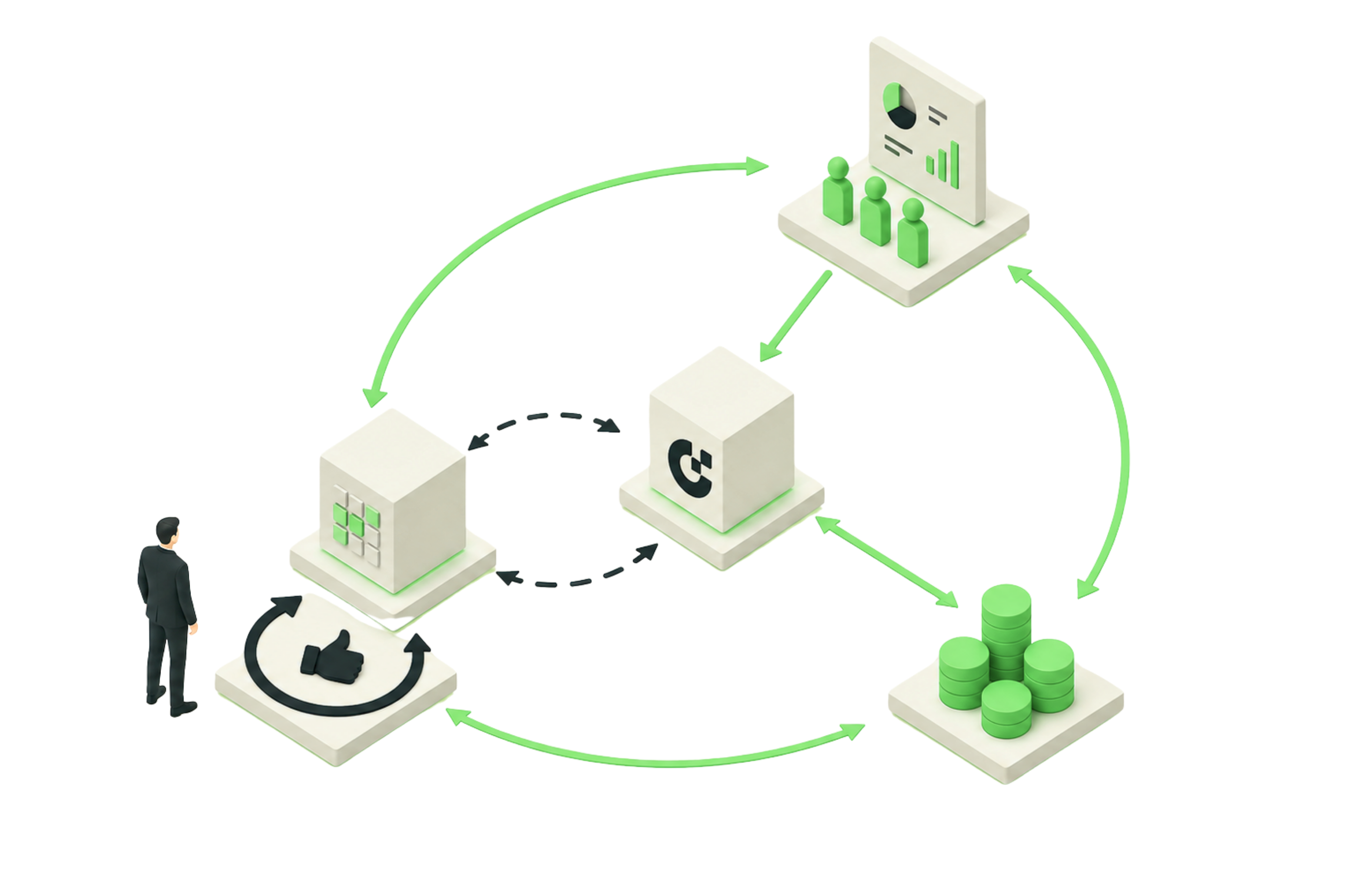
The asymmetry of information runs the opposite way to what everyone assumes. The platform holds the behavioural data and the bidding power. You hold the only data that knows what a user is actually worth. And by default, the two are never introduced.
The windows differ by platform. A conversion value landing weeks after the click is not a bidding signal: the auction has already moved on. On every platform, the best prediction engine in history is doing your bidding on the first day or two of evidence, in businesses where value reveals itself over quarters.
So what? It's not that the machine fails. It's worse: it succeeds, brilliantly, at the wrong user. Ask for trial starters, and it will find you trial-starters with terrifying efficiency, including the ones who never pay. The output isn't a malfunction. It's executing to perfection, on a bad brief.
The instinct is to respond by trying to out-model the platform. That's the wrong fight. You will not out-predict a foundation model trained on trillions of interactions. The platform is missing exactly one input: the future value of each user. Your job is not to build a better bidder. It's to brief the existing one properly.
The bidder is a live system that reacts to your inputs. You face three core risks:
That's the real divide in this market. Not who has a model but who has solved the connection: value predicted within hours, shaped to what each platform's bidder can digest, refreshed as evidence accumulates, and recalibrated as the audience shifts under your feet.
None of this matters if your early signal already predicts long-term value. The opportunity lives in the gap between early proxies and eventual value, and that gap is measurable.
The platforms have spent billions making the bidder smarter. The constraint isn't the machine's intelligence. It's the quality of the brief. The advertisers pulling ahead aren't the ones with the best models. They're the ones who finally told the machine what a customer is worth.
Today's advertising platforms are the most advanced prediction systems ever built, trained on trillions of interactions across thousands of GPUs. But they share a critical blind spot: they never learn which customers are actually worth the most. Chris Jones unpacks why out-modeling the platform is the wrong fight, and what the right one looks like.